Dear readers,
I owe you an explanation. I had promised to release an episode of this series every Tuesday through August and here I am, almost a week late with the third instalment.
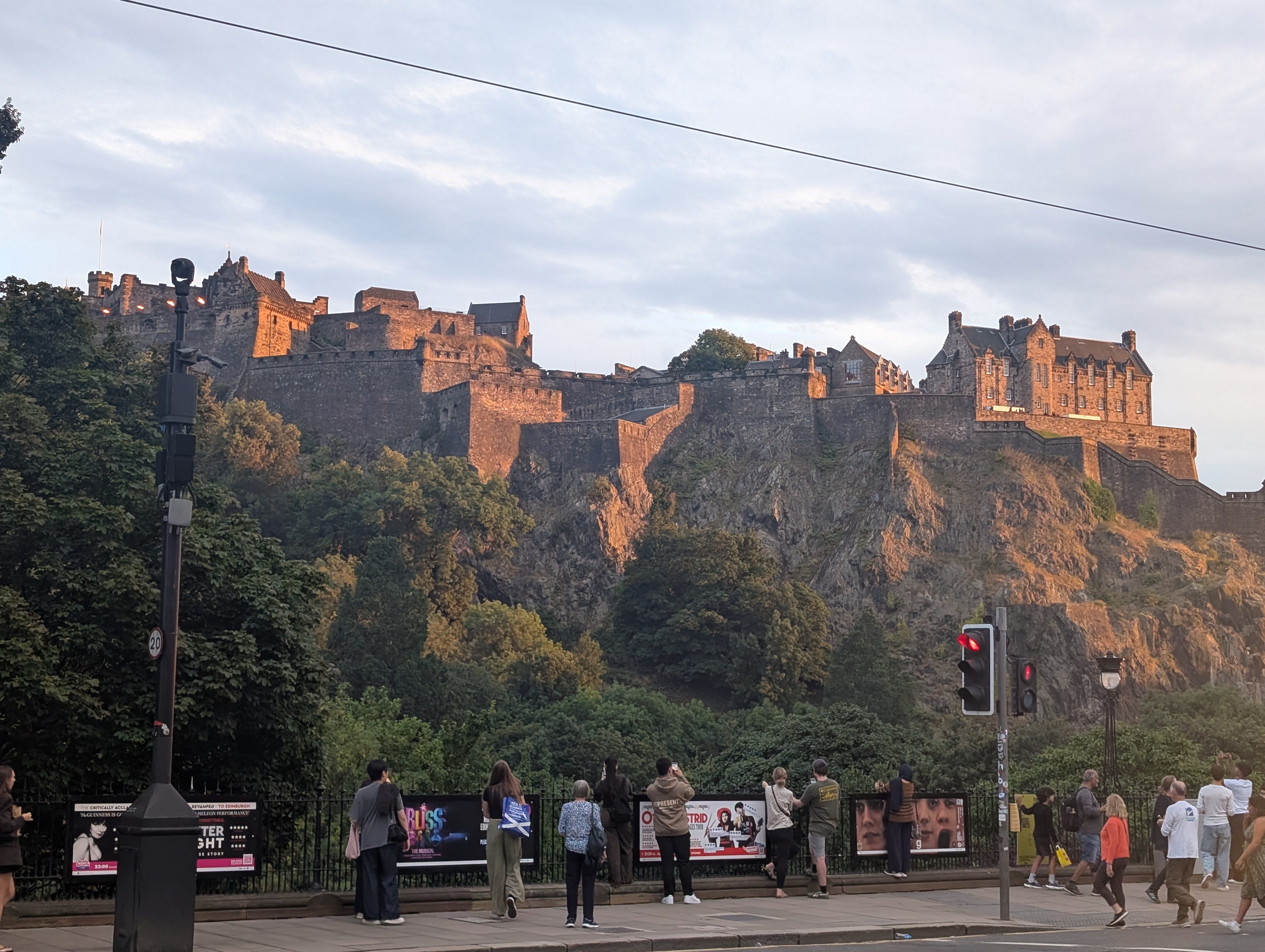
It so happens that I spend my summers in the United Kingdom. While I was writing Hijos del optimismo, I hid away in various corners of Scotland, and since then, in my mind, this part of the world is bound up with writing. This year I had planned to stay in Glasgow, in what was meant to be a slightly monastic sort of stay. And since Adam Smith worked and taught there for years, it felt fitting to write a series on his thought.
Then life got in the way: at the last minute I had to change accommodation and ended up in Edinburgh, where it so happens that every August the largest arts festival in the world takes place. Some 50,000 performances of nearly 4,000 different productions are gathered here across 300 venues. The Fringe attracts more than 4.5 million visitors and, to serve them, the streets fill up with makeshift bars and beer gardens. It’s a month-long party on the scale of an entire city. Not exactly a peaceful retreat.
The monastic plan lasted about a week, and my writing schedule flew off with it.
In fairness, it has also been an extraordinary time to think about human exchange. The Fringe is ultimately an enormous market where more than 2.6 million tickets are sold every year, even when there are hundreds of shows that are free. I’ll be writing something about it in September, if financial hell hasn’t broken loose by then.
Anyway: my apologies, and let’s get back on topic.
This is “The Undesirables”, the third part of a summer series called “Adam Smith’s Error”, where we’re trying to find an answer to the question of what wealth is. Why? Because the one we have doesn’t work, and it is leading us into a bottomless pit.
If you haven’t read the previous chapters, worry not! Each one works independently. Still, you can go back and start at the beginning following these links:
The Undesirables
What is Wealth?
Intuitions for a Knowledge Theory of Value
And remember that you can follow me (quite literally) all around the Internet:
Bluesky — Twitter — Instagram — TikTok — Whatsapp
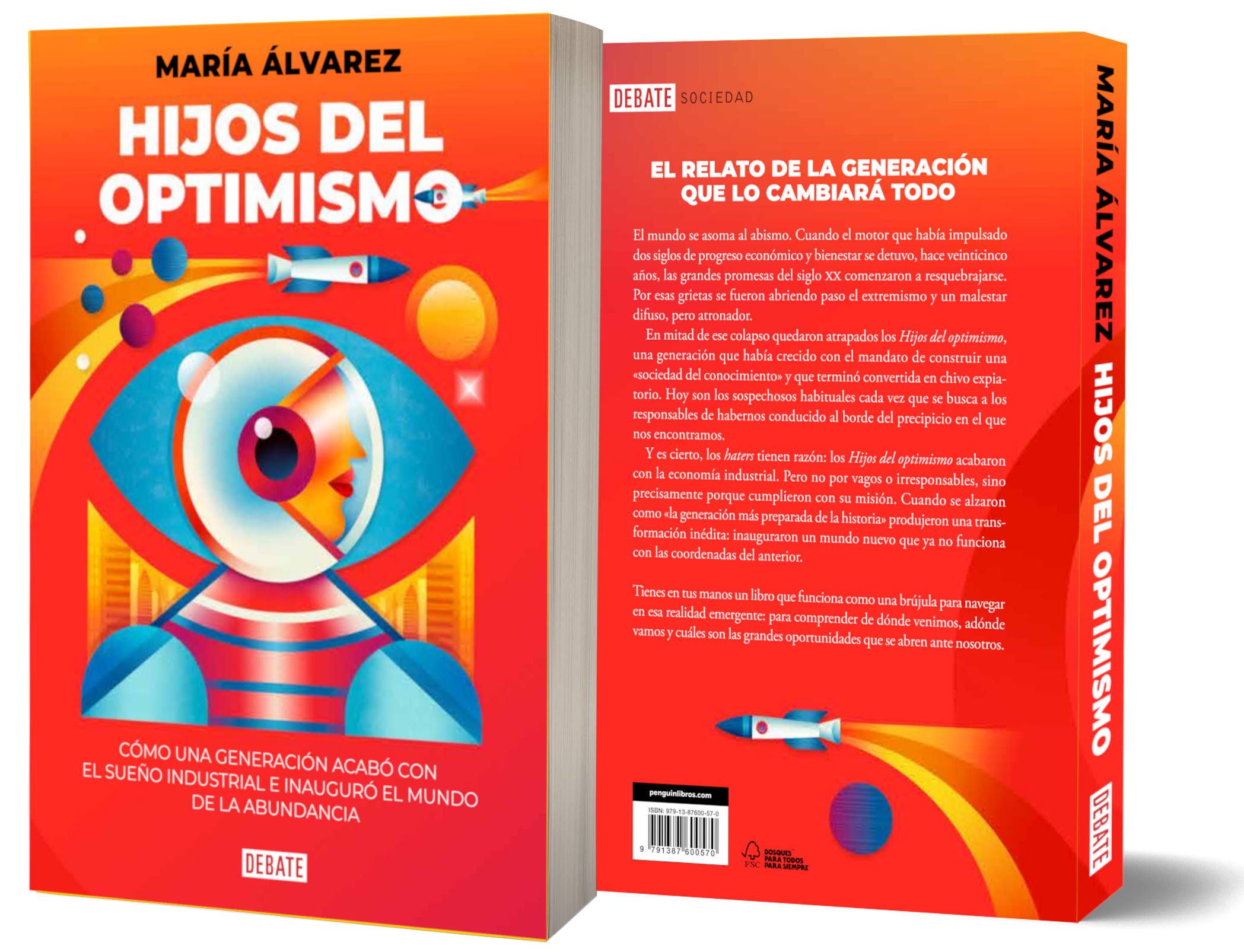
:: Hijos del optimismo ::
The undesirables
“I want someone to tell me what to wear in the morning. No... I want someone to tell me what to wear every morning. I want someone to tell me what to eat, what to like, what to hate, what to rage about, what to listen to, what band to like, what to buy tickets for, what to joke about, what not to joke about; I want someone to tell me what to believe in, who to vote for and who to love and how to… tell them.
I just think I want someone to tell me how to live my life, Father, because so far, I think I’ve been getting it wrong. And I know that’s why people want someone like you in their lives, because you just tell them how to do it. You just tell them what to do and what they’ll get out of the end of it, even though I don’t believe your bullshit and I know that scientifically nothing that I do makes any difference in the end anyway, I’m still scared!.
Why am I still scared? Just tell me what to do. Just fucking tell me what to do, Father.”
— Fleabag, series 2, episode 4, Phoebe Waller-Bridge
There’s a paradox in modern society that has social scientists puzzled: the angriest people are not the same people as those having the worst time.
The official story is that falling living standards are at the root of social discontent. But if we look at the data, that direct relationship is very hard to find. Millennials do not really live worse than their parents; working-class people are not poorer today than they were twenty-five years ago (in one or two countries perhaps they are, certainly not in most); inequality is on the rise in the US, but in Europe, where populism runs rampant, it has barely moved this century. Being “angry” or showing “distrust” in institutions does not correlate with social class: there are handfuls of populist voters in the wealthiest postcodes. And as a whole, developing countries record higher levels of trust than developed ones.
Politicians and their crews often whine bitterly about this contradiction. In their view, there’s a disconnect between reality and what the majority feels, so that no matter what they achieve, people fail to recognise their accomplishments and “are hesitant to accept it when they see progress on the horizon“.
American Democrats used to despair about this. When Joe Biden ran against Trump, unemployment stood at 3.4%, the lowest figure since 1969. During his term in office fourteen million jobs had been created, and the lowest wages were the ones rising fastest. And yet, at the exit polls, 46% of voters said their family was worse off than four years earlier: a larger share than in 2009, in the middle of the financial crisis.
Is this a contradiction? I don’t think so. It only looks like one from the wrong angle.
Most people, even if only intuitively, are right to think their conditions are worsening. Because what we call ‘material’ here is in fact a euphemism for ‘wealth’, and wealth is not what we think it is. Many people feel poorer today for a good reason. It is the analysts who fail to understand why.
Normiemaxxing
If we follow the old rationalist story of classical economics, wealth is the product of the industrial system. A collection of items. From which it follows that the more material stuff one has, the wealthier they should consider themselves. If wages and jobs are going up and everybody has more stuff than ten years ago, people should be content.
But if we think of wealth as a stock of human desire — that is, if wealth is not what we have but what other people want from us — it becomes evident that many people’s stock has been depleting over the past ten or twenty years.
What is it that other people want from us? What is it that humans exchange with one another? What do we have to do to be considered valuable by others?
Industrial society rested on a deal: if you behaved in one very specific way, you would be considered valuable. You didn’t need to invent anything, or to find your own way through life. You did not need to be special. Or remarkable. Or different. On the contrary: the less special you were, the better things went for you.
So much so that the best specimens of this industrial species were the ones who achieved absolute normality. Superman, Batman, Spiderman and James Bond were all the same trope: the-utterly-ordinary-guy-who-is-in-fact-a-superhero-in-disguise. And all the media and the schooling of the second half of the twentieth century were one very long exercise in teaching you how to be one of them.
Television showcased what a family looked like (spoiler: like every other family on television); schools sorted children into the same handful of patterns; fashion taught people what to wear; magazines for little girls instructed them on how to be a woman; every media outlet went on about how to be a man, and you needn’t ask yourself what to study, what to think or how to behave. It was enough to choose a partner as similar as possible to all the other partners and keep moving.
Quirks, on the other hand, were meant to be buried deep. If you were the kind of person who had a special interest, better keep it to yourself. The outcasts were routinely beaten and harassed at school, and then calmly slandered in the mainstream media. Industrial society was an enormous instruction manual for a serialised life, and the real skill was following it.
To say that someone “would be considered valuable” in society is the same as saying that society would desire them: there would be a demand for them in the job market, in the dating market, in the representation of society that the media display daily, and everywhere else.
So the great brands — Ford, Volkswagen, Coca-Cola, Nike, Adidas — were not producing things: they manufactured desire. And there were two ways of taking part in the distribution: working for them, or buying their products.
In essence, for a very long time industrial capitalism itself was the true factory of desire. What the West exported was never really cars or cans: it was the European liberal dream, a technoutopian vision and the American Way of Life, but packaged in thousands of products and services. Those three ideals of what a life could be were sold to the rest of the world as the future, and became an enormous stock of desire fed by every other country on Earth. Western citizens who abided by the code got to share in that stock without needing to demonstrate any characteristic of their own. By taking part in the “productive system” they could consider themselves valuable to society without having to create anything new, or attractive, or special.
Today, even if no one dares acknowledge it, that time is over.
Of course all people are still valuable. But in the realm of economics, the value of something depends on its scarcity. What allowed a handful of countries to sell that packaged desire for most of the twentieth century was the monopoly the West held over the dream. Western countries were the only ones capable of projecting a vision of what a good life should look like. Today that monopoly is gone. Dozens of countries can make anything we make and, more to the point, they can project a bright future for their own citizens.
The curious thing is that, for lack of a new one, they are all selling the same dream we in the West have been selling for seventy-five years.
China is running a Rooseveltian programme in the twenty-first century: infrastructure at scale, a rising middle class, and the promise that the next generation will live better than this one. India will do the same soon enough. Mexico, Chile, South Korea, Singapore, Taiwan, Poland and the Baltics are examples of countries that now stand comparison with any Western nation. In most developing countries there is now an upper class living a life indistinguishable from ours. And all those people have built their own factories of desire, from holiday destinations to financial centres, from pop stars to film industries. They no longer want our stuff as much as they used to.
Our stock of global desire is dwindling, and we are not as wealthy as we used to be.
Moreover, the ascent of all those countries to the role of desire manufacturers has made everything abundant. Or, as economists like to put it, there is “overcapacity” in practically every sector of the industrial economy.
I could throw gazillions of data at this, but there’s no need. You can see it on any high street: in Primark, Costco, Poundland and the middle aisle in Aldi, where a chainsaw sits beside a ski jacket. Products are everywhere and they barely have any value left. They are there as a pretext for the services organised around them: the wages of the clerks, the rent on the unit, the margin of whoever owns the chain. The outputs of industrial production are becoming commodities, like bananas.
It shouldn’t even surprise us, because this is not the first time it has happened. In 1900, four in ten Americans worked on farms; today it is around one in fifty. Meanwhile, we produce more food than at any other point in history. Exactly as is happening now, at the beginning of the twentieth century the triumph of agricultural methods drove prices down so far that food became a commodity. Would you say agriculture “failed”? Probably not. It succeeded so completely that it stopped being able to share its value with the people who practised it: it could no longer give meaning, or value, to everyone in the rich countries.
The difference between that moment and this one is that the West no longer has another project to move on to. It took fifteen years and a world war, but after the crash of 1929 we climbed out of the agricultural paradigm and built something else: consumer capitalism, Fordism and the welfare state. That was the project that brought us here — and it is the one China and others are copying now.
Without a new economic — or rather civilisational — project beyond “making more stuff”, a.k.a. “being more productive”, the West is drowning. And this is why the anger doesn’t follow economic indicators. If we measure it in objects, the average Westerner of 2026 is rich beyond anything their parents could have imagined: they have more clothes, more appliances, they eat more calories, they consume more entertainment, their house is worth more and they probably even have more and better cars. Measured in desire, however, they have been steadily dispossessed.
This is why people hold on to their house, their pension and their national status as if their lives depended on it. These are the last things they own that other people still want. When people weigh what they already own against their capacity to generate new desire, they conclude that their assets must be defended at all costs. Politicians know this, which is why they are so wary of questioning those assets and instead commit to doing everything possible to make them rise in price. The consequence is the housing bubbles of the past twenty-five years, everywhere, and the savings bubble we are living through now, where pension funds are propping up the AI boom like there is no tomorrow.
The Undesirables
In this race to the bottom, men have taken the hardest hit. Masculinity was peak industrialism, its model. Dressed literally in suit-uniforms, men were meticulously trained to be like all the other men. They are the ones with the least capacity to adapt.
If the men of the manosphere are angry, it is because their stock of desire — women’s desire, employers’ desire — is dwindling: the market for “just a normal guy” is shrinking, and these people don’t have the tools — emotional, educational, cultural — to become anything else.
Far from being a problem for those men alone, I believe we would be wise to recognise the part of that feeling we all carry inside. Aren’t we all, in one way or another, trapped between an old model of what-we-should-be that no longer pays and the vertigo of becoming something different?
Entire professions feel the same. Not just industrial workers: journalists, teachers, paralegals, photographers, truck drivers, accountants and graphic designers, along with the people running a corner shop that competes with Amazon or a clothing brand that competes with Shein.
And the same feeling reverberates in the tensions that emerge around race and gender. Whiteness, heterosexuality and binarism were a kind of asset people had invested in — often with a great deal of effort and sacrifice to fit into those strict categories. When those attributes become possibilities, when they go from universal to optional and people can desire the alternative, the old ones lose value.
More than that: for lack of a new model for this new phase of capitalism, social media is defining success simply as the opposite of industrial homogeneity. Where the twentieth century picked on the odd ones out, we now have a whole vocabulary of contempt for those who can’t — or won’t — be different: Karen, NPC, normie, vanilla, basic, wagie, mid. No wonder almost everyone who is “just” something feels the ground shifting under their feet.
To refer to all the people who are no longer needed to keep the great machine of the economy turning, Aaron Bastani coined a term: the “unnecessariat”. But I think it would be far more accurate to call all these people who feel expelled from the global machinery of desire the unwanted; the new poor. Or worse: those who, by their very configuration in life, without having done anything but follow the rules, have become undesirable. They are the undesiderat.
Re-stocking desire
Can this trend be reversed? Can we go back to the old ways of the industrial era and rebuild the structures that once conferred value on people through work and uniformity?
The whole economic and political world is asking that question right now. Every debate of the moment — China Shock 2.0, Europe’s slide in competitiveness, Germany’s industrial crisis, tariffs in the US — is the same debate.
I don’t think it’s possible.
First, because industry today doesn’t need that many workers. A stronger industrial base might fix the current account, but it wouldn’t do much for the people who used to work in the factories. China is running headlong into this problem, with rising unemployment figures and more people pushed into the informal economy, just as in the West.
Second, because we are not those countries anymore. Fewer than one in five Chinese adults holds a tertiary qualification; across the OECD it is over 40%, and among the under-thirty-fives close to half. When we were at 15% we were productive machines too. But societies change, and what ours is asking for today is a new model, not their parents’ one back again.
And third, the most important and least intuitive: because making more stuff would not make people feel wealthier. Even if we recovered the industry; even if people were willing to work — and be paid — like a Chinese factory worker, that would not make Europeans any more desired than their counterparts elsewhere. It would be the same, except working from dawn to dusk in a factory in ferocious wage competition with workers from every country.
Henry Ford is supposed to have said that if he had asked his customers what they wanted, they would have told him a faster horse. Countries today, trying to return to a glorious industrial past, are doing what Ford knew to avoid. The United States cannot fix its social crisis by bringing the factories home. China is going to become the world’s factory, but it too will fail to turn that effort into a source of meaning for most of its population. We can’t fix social discontent by increasing production, for the same reason we can’t measure it in material conditions.
What we need is a new model. A new dream. A new stock of desire. And we won’t get it as long as we keep dragging around the old ghost of productivity as the source of social value.
All these angry people have a point. They are being asked to be different, to be special, to have something of their own to offer, when all their lives they had been told the opposite: that they had to be the same; that sameness was the decent thing, and that standing out, having a personal brand, wanting to be noticed, wanting to be desired for themselves rather than for the structure they belonged to, was a moral deviation. Many of them still see it that way.
So much so that I was expecting my previous post to ruffle some feathers. It happens every time I talk about the subjective theory of value, and it happened again last week. There are people who find it upsetting to hear that social value lies in what other people want from us, and I don’t blame them.
But I think those people are confusing my personal beliefs about human value — or their own — with the purpose of this article, which is to understand the behaviour of contemporary society. To take a less politically charged example, imagine we were talking about how people choose what to eat. One discussion would be about what they ought to consider when deciding what to put in their mouths; the other about what actually goes through their minds at the fridge door. One is about moral absolutes, the other about observed behaviour. I’m interested in the latter.
It is legitimate to think that people shouldn’t be measured by what others desire in them. And yet every single one of us does it constantly, and almost always without noticing. Nobody thinks teaching posts should be handed out first-come-first-served. Nobody pays hundreds of euros to hear a randomly chosen person sing, or reads a book by just anybody, or wants their prime minister chosen by lottery. Whatever we believe about equal human worth — and I’m not arguing with it — this is what we do, and any account of how societies distribute income, attention and opportunity has to start there.
That said, and given that this is such a politically charged topic, I understand that many people wouldn’t want to hear from someone who does not share their moral convictions, in the same way that they wouldn’t listen to ideas about biology from someone who had declared their belief in the superiority of the “white race”.
So let me clarify my personal stance on human value from a moral point of view, so that everyone can relax:
I believe that every human being is a miracle.
There is a quote that lives rent-free in my head. Erik Olin Wright wrote it in the journal he published during his last days, while suffering from terminal leukaemia:
“I have a very limited time left in this marvelous form of stardust which I’ve been talking about over the past few months. I don’t feel any dread. I want to assure you that I don’t feel fear about this. It seems very petty to complain about the eventual dissipation of my stardust back into the stardust of the cosmos after having lived 72 years in this extraordinary form of existence that very few molecules in the entire universe get to experience. Indeed, to even use the word "experience" with respect to my stardust is amazing. Atoms don’t have experiences. They’re just stuff. That’s all I really am: stuff. But stuff so complexly organized across several thresholds of stuff-complexity, that it’s able to reflect upon its stuff-ness and what an extraordinary thing it has been to be alive and aware that it’s alive and aware that it’s aware that it’s alive.”
We are — we truly are — stardust.
Let’s say there are 10⁸⁰ atoms in the observable universe. Pick one at random. The odds that it belongs to the biosphere — that minuscule fraction of matter which is alive on Earth — are about one in 10³⁹.
And don’t stop there. We are not just “living matter”. We are human beings, the only species capable of reflecting on its own materiality; the only collections of atoms aware that they are alive. On top of that, you and I belong to the tiny handful of human beings who, across the more than 12,000 generations that preceded us, do not have to fear watching their children die a horrible death. The odds of our existing, the probability that any of us should be here enjoying this unimaginable experience, are, as Richard Dawkins put it, “stupefying”.
We are a miracle. Every single human ever born is. Even the most despicable ones, like Pol Pot, or Mussolini, or whoever invented those exhausts that the most wretched of motorcyclists fit to their bikes to make them louder: every one of us is a wonder.
I subscribe to the idea that we are a way for the Cosmos to discover itself, and the fact that we waste a single second of our extraordinary, precious, limited existence quarrelling about who owns what, or who owes us something, or any other petty detail of life, feels so alien to me that sometimes I want to grab people by the lapels and yell at them: “Don’t you realise you are going to die, you reckless fool?!”
But I can’t. I’m not allowed to shake random people into believing what I believe. Nor is anybody else. Nor do I know of any force powerful enough to make everyone in this world arrive at my same conclusions.
And I wouldn’t make the mistake of thinking I have the right to try, either. I am in no way superior to anyone for thinking this way. If I can detach myself from my own individual experience, it is because I got the opportunity to learn history, physics, mathematics, astronomy and philosophy while other people did not. I also have advantages — a certain amount of money, intelligence, education, the right social attributes — that let me live a life cushioned from fear. Had my life been different, I would hold other beliefs. In the same way that I would probably be a practising Muslim if I had been born in Saudi Arabia, or illiterate, toothless and the mother of ten children if I had been born in 1670.
So you’ll have to excuse me if I’m not interested in discussing moral absolutes about human value. It’s not that I don’t believe those debates matter: they do. But they’re impractical at a time when we are struggling to find common ground on far simpler questions.
Instead, I think I can offer something more useful: a subjective theory of human value that is fairer than the one we have now. One that works, one people can make decisions with.
Because today, as Phoebe Waller-Bridge puts it so unforgettably in Fleabag, a lot of people are asking for instructions. They want someone to tell them what to study, who to work for, what they’re supposed to like, what not, and who to hate. They need new rules.
This is what I’m after with this series. Not an agreement about what a person is worth, but an explanation of how social value actually gets made, of why we are valuable to one another — one that stands regardless of anyone’s moral position.
That’s what this series is about.
Next Friday — with any luck — I’ll follow up with the conclusion. If desire is value, what is it that we want from one another? What is human desire for other humans made of? Or, in other words: what is wealth?
And on the Tuesday after that we wrap up with some intuitions for a theory of value where knowledge, rather than effort, takes the leading role.
I hope you’ll tag along, despite my unjustifiable delays.
If this article has made you see the world from another angle, and if you like that sensation of your head suddenly being turned around, I think you’ll like Hijos del optimismo. It’s my first book, the older sibling of this newsletter and the most powerful explanation of the changes we are living through.