


The original (Spanish) version of this article can be found here.
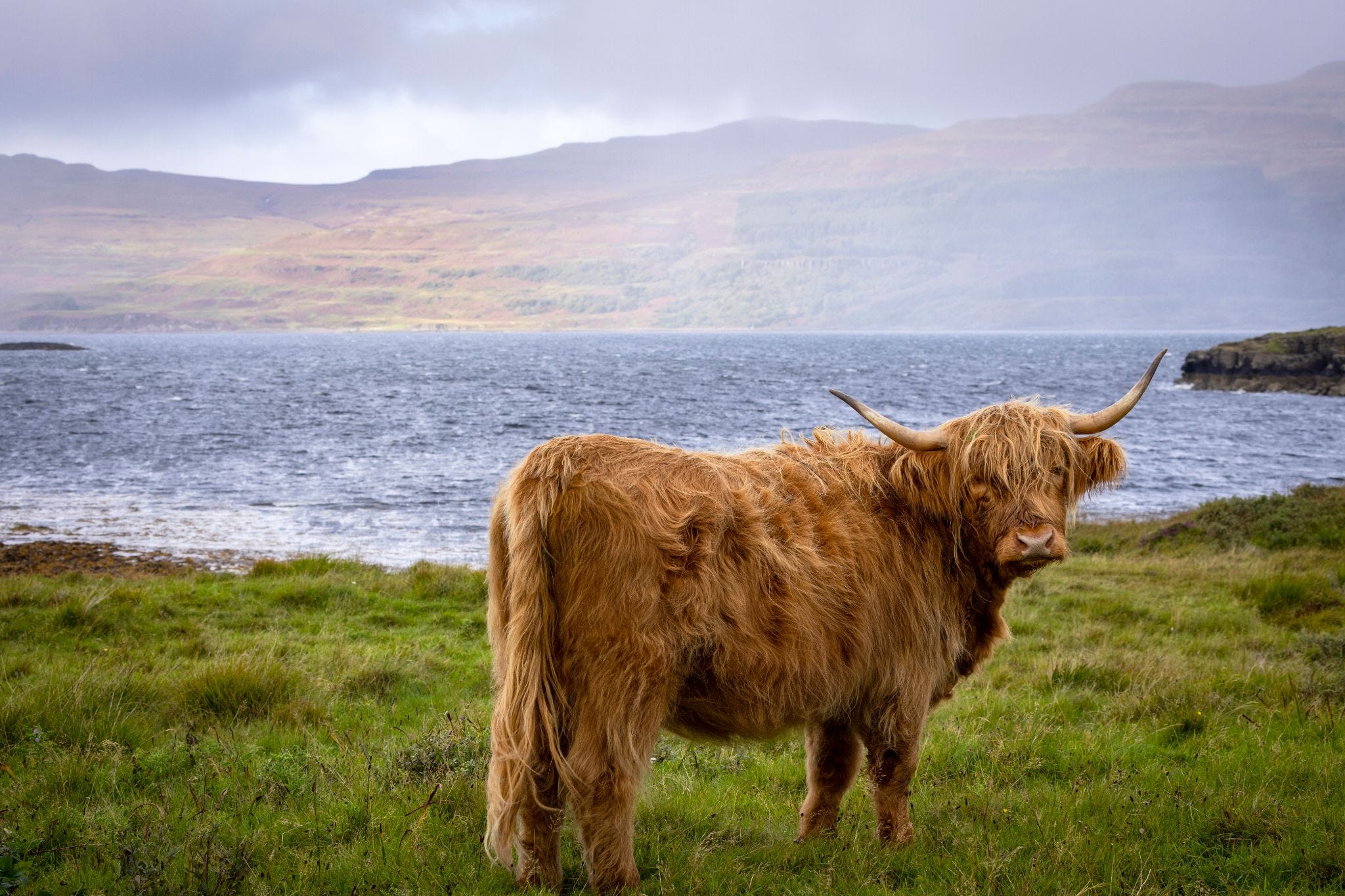
I have been studying Donald Trump for most of my adult life. Fifteen years ago, before his name began to appear on Republican shortlists, one of his flagship projects was a golf resort a few minutes from my family home in Scotland. That resort became a foreign body in the local landscape — because that remote place, where almost nothing newsworthy ever happens, spent years on the front pages of newspapers across the United Kingdom.
Do you know how he managed it?
A few months before the resort opened, Trump — already an American television star and a fixture in the British media — sued the Scottish government, demanding that it halt the installation of a series of wind turbines.
Despite being an oil producer, Scotland had been one of the first countries in the world to make the energy transition a point of national pride, and lacking sunshine, around 2010 it was putting up wind turbines everywhere. Trump argued that this was unacceptable because the turbines “ruined the views” from the club.
What followed was a legal and media circus in which the tycoon went so far as to take out press adverts accusing the Scottish First Minister of releasing terrorists. He stirred up such a cultural storm that for many years the story kept resurfacing, delivering millions of pounds’ worth of free publicity in media outlets across the United Kingdom.
In time, he lost the case. In reality, it never had any prospect of succeeding — not only because the turbines were in the North Sea, more than two kilometres offshore on land that did not belong to him, but because it should be self-evident that the interests of a private developer cannot be allowed to obstruct a country’s project to overcome its dependence on fossil fuels.
But along the way, at a decisive moment, Trump planted on every front page the idea that democratic governments were servants of elites intent on changing British ways of life — dismantling what remained of the empire, selling the country out to foreign powers, and installing a woke agenda (even though that word had not yet been invented).
Trump lost the case. But a few months later, he won Brexit.
Does any of this sound familiar?
Since then, Donald Trump’s modus operandi has always been the same. The businessman has built a political career by placing the same narrative everywhere: democracy is a sham, and beneath a false appearance, we are governed by extractive elites working for a privileged minority that has seized power by co-opting institutions. Fortunately, these villains are a spineless bunch of bureaucrats — soft, lazy, and cowardly. When confronted with a strong man, they crumble. This is why the world should hand power to strong men like him, who are the only ones capable of putting an end to the woke elites.
More than that: Trump understands something that other politicians seem to struggle to grasp. Reality does not exist — except as an impression in our minds. What we call reality is nothing more than a narrative in our subconscious. So if one can make people believe that something is happening, it does not need to actually be happening. You do not need to win the case for it to appear, for a time, that a businessman can hold the governments of the United Kingdom to ransom. You do not need to invade Venezuela to make the world believe the country is under your control. You do not need to abolish fundamental freedoms across the United States for it to seem like a lawless state. It is enough for people to believe that all of this is true.
Or that it could be, in the future.
In psychology, there is the theory of “broken windows.” In the 1980s, two criminologists argued that visible signs of crime or civic disorder create an urban environment that ends up encouraging the emergence of further crime and disorder — including serious offences.
“Social psychologists and police officers tend to agree that if a window in a building is broken and not repaired, soon all the others will be broken too. This is equally true in affluent neighborhoods and in run-down areas. Window breaking does not necessarily occur on a large scale because some areas are inhabited by window breakers and others by window lovers; rather, an unrepaired broken window is a sign that no one cares, and so breaking more windows costs nothing.”1
In other words: it is not rules that make the culture of a society. In fact, everywhere there are rules that are not observed at all — think of traffic laws or drug use, for example. On the contrary, it is culture that dictates which rules, out of all those that exist on paper, are actually followed and which are not.
I like to explain this theory through the example of shellfish bars in Spain. In some bars — traditionally those that serve prawns — the custom is to throw the shells on the floor. As a result, the floors of these establishments are typically covered in an amount of organic matter that would be considered revolting in any other context. There are, of course, also bars where dropping anything on the floor would be an outrage. Neither type has a sign on the door telling customers where to put their rubbish — yet everyone understands the rules in both.
Culture makes the rules. This is why no one studies the criminal code of the country they are going on holiday to. They arrive, observe, and behave as they perceive the locals around them to behave. It is also why the international order sometimes operates as international law dictates — and sometimes does not.
And if someone is capable of conveying that a culture has shifted — in favour, say, of a lawless society ruled by strong men — they can, without changing the written rules, without altering what is actually happening at its source, eventually change reality itself. Or bend it to their preference.
The Broken Windows Coalition
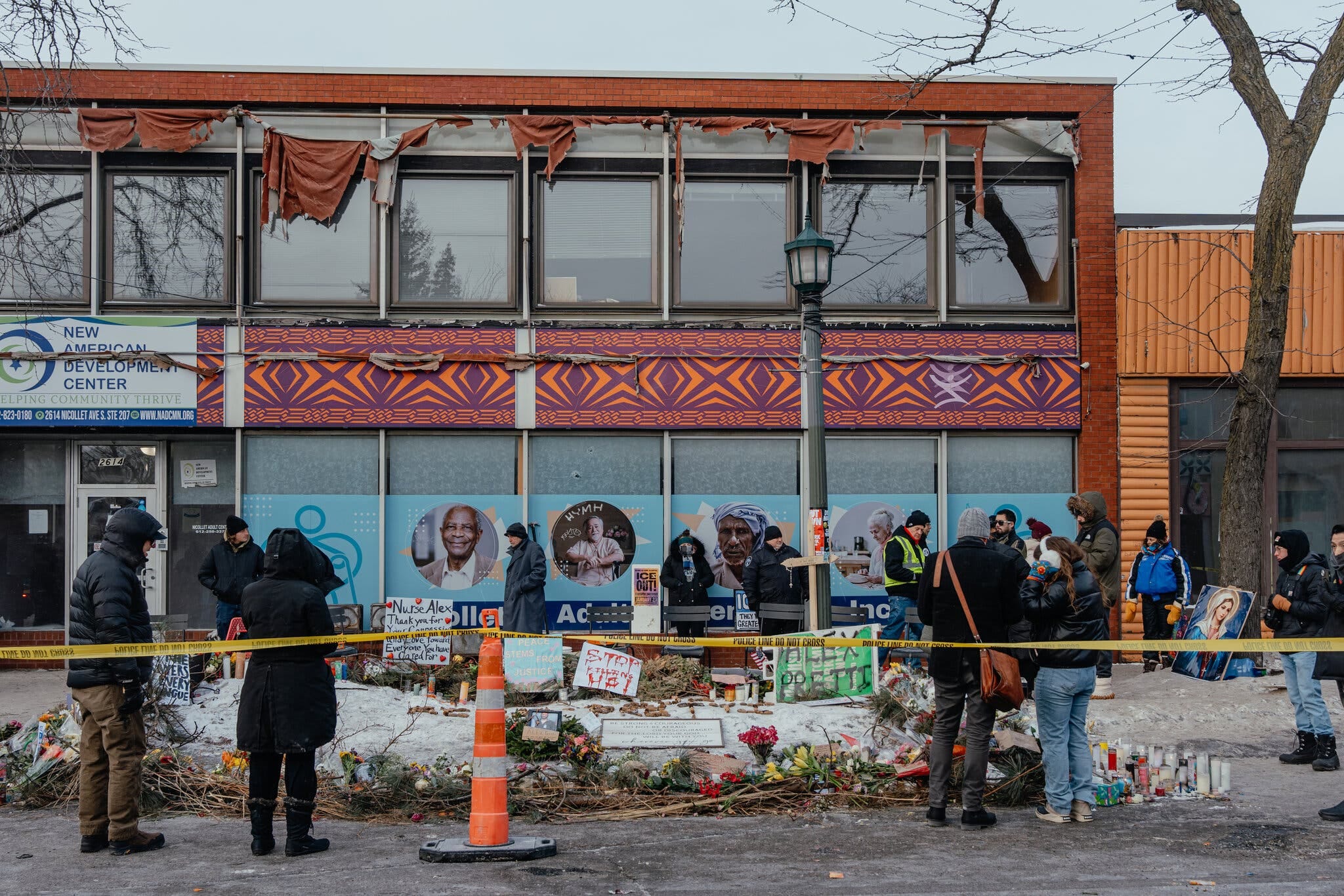
Trump’s obsession, then, is to convince us that we live in a dangerous place — full of villains and crime, a world where the rules we once trusted have stopped working. This is why he devotes himself to breaking windows: through ICE raids, “coups” in other countries, and proclamations that he is going to open a resort in Gaza.
The trouble is that a single broken window does not make a culture. For us to have come to believe what Trump wants us to believe, an enormous international coalition has had to form in recent years — a motley collection of actors united by their relentless insistence on pointing out every window that is, they claim, broken.
In the front line of that coalition stands the far right across the world, parroting the same message Trump never tires of broadcasting: migrants, woke ideology, elite betrayal.
But in the second line stand the media outlets that the alt-right has labelled the “legacy media.” The great newspapers of the twentieth century, stripped of a viable business model by the transition from print to digital, have become addicted — much against their better instincts, it must be said — to alarm and outrage, chasing the clicks that guarantee their advertising revenue.
This works because, as human beings, we are wired to detect signals of danger even before we have fully understood them. Evolution has shaped us to pay attention to whatever might threaten us: an unusual movement, an unexpected sound, a broken window. Our brains prioritize what is perceived as risk — they make us look at and react to threats first, and analyse them later. This is why, when someone insistently signals that the world is full of dangers — even if many of them are imaginary or exaggerated — our attention falls immediately on those broken windows, and we feel compelled to click.
And so the media, one after another, buy into and amplify the Trumpist narrative, because pointing to broken windows generates far more clicks than offering balanced analyses of the state of democracy.
Silicon Valley, too — with Sam Altman, Peter Thiel, and Elon Musk at the vanguard — has signed up to proclaim that the world has ceased to be a solid and trustworthy place. This is why everyone involved in the artificial intelligence scam tries to make us believe that LLMs are going to displace millions of jobs and upend entire industries — because in that AI-dominated world, they are the ones in charge.
It is irrelevant that three years have passed since the launch of ChatGPT and none of this has happened, nor shows any sign of happening. What matters is not changing reality, but making us believe it is about to change. Pointing to the broken windows so that we believe we live in a lawless world, and go looking for shelter in the solutions they offer.
And a section of the left — what we might call the populist left — also wallows in that vision of an unjust world in which elites have been delivered into the hands of a minority (not the woke, in this version, but the billionaires). Just as consolidating democracy, seventy-five years ago, required the left and the right to agree that it was the best model available, weakening liberal states today is also requiring a certain connivance between a certain left and a certain right.
I do not believe Trump will invade Greenland. I think he is a braggart and a con man. Touching Greenland would trigger a war with the second most powerful military in the world, as well as an immediate global economic collapse.
But I do believe that Europeans and liberals should go to war. Not only against Donald Trump, but against this broken windows coalition.
To win it, we need to build a coalition of our own: one committed to stopping the pointing at broken windows. One that refuses to keep proclaiming that nothing works. Because it is not true. But even if it were — if you are old enough to read this, you are old enough to decide what comes out of your mouth.
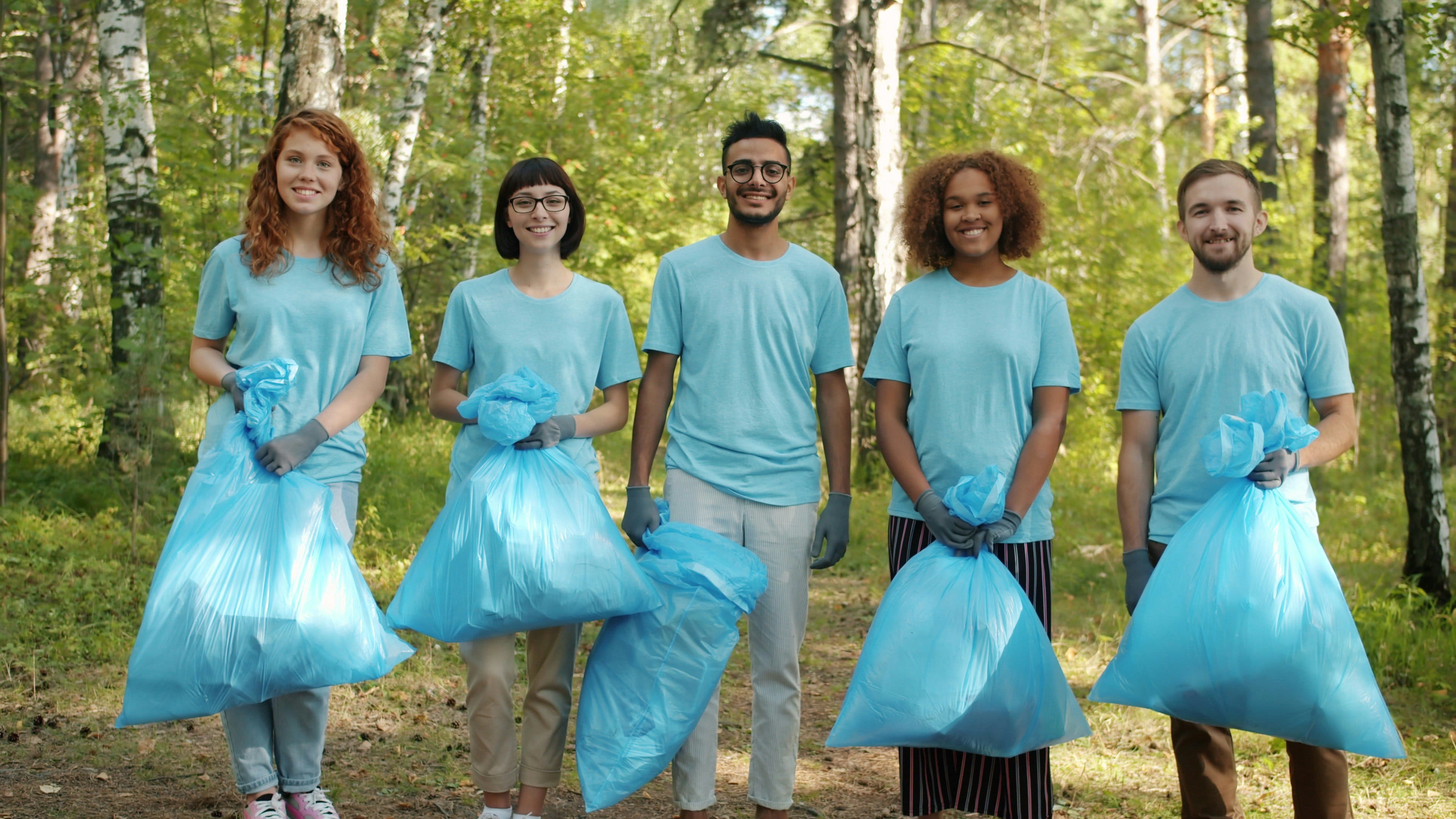
Like those volunteer groups that organise to pick up litter thrown in the countryside, let us organise to remind ourselves — as often as possible — how far we have come. Never before, across all the millennia of human history, did democracy exist. International institutions did not exist. The recognition of fundamental rights did not exist. I would never have been able to write this blog — or anything else — without the advances of equality.
Progress did not stop in the twentieth century. On the contrary: in the last twenty-five years, 1.5 billion people have been lifted out of extreme poverty, global GDP per capita has risen from thirteen thousand to twenty thousand dollars, life expectancy has increased by seventeen years, and child mortality has been reduced by two thirds. Today, 67 % of the world’s population has access to the internet, and half can connect to 5G networks — something unimaginable barely a quarter of a century ago.
In that same period, technological advances have allowed us to sequence and edit the human genome, develop messenger RNA vaccines, and glimpse the possibility of curing cancer. Meanwhile, the discovery of the Higgs boson and of gravitational waves brings us closer to understanding the universe in ways that, just a few years ago, were pure fantasy.
Today, the global rollout of renewable energy invites us to imagine a world in which climate change ceases to be a threat. And as the price of solar panels has fallen by a factor of twenty-five and installed capacity has multiplied by fifteen hundred, we stand at the unprecedented threshold of a future of clean, abundant energy.
For all the problems they may have, democracies have given us an extraordinarily long period of peace — remarkable, when we consider the speed and force with which societies have been transformed. Trade, international mobility, and a web of global institutions, for all their flaws, have proven to be a good adhesive, and have provided a guarantee of stability between nations.
Human progress has not stopped. On the contrary, it is advancing at a dizzying speed, transforming our civilisation and demonstrating that we can build a more prosperous and more free world.
We live — and I challenge anyone who disagrees to prove it with data — in the best place in the world and at the best moment in history. If we feel the world lurching beneath our feet, it is not because people have turned wicked, but because all our norms were built for a society that exhausted itself in the twentieth century, and we do not yet have new ones.
If anything binds us today to fear, hatred, and war, it is not the direction in which the world is transforming, but our stubborn resistance to change — our insistence on continuing to point at the broken windows.
The good news is that it is actually within our power to stop. :D
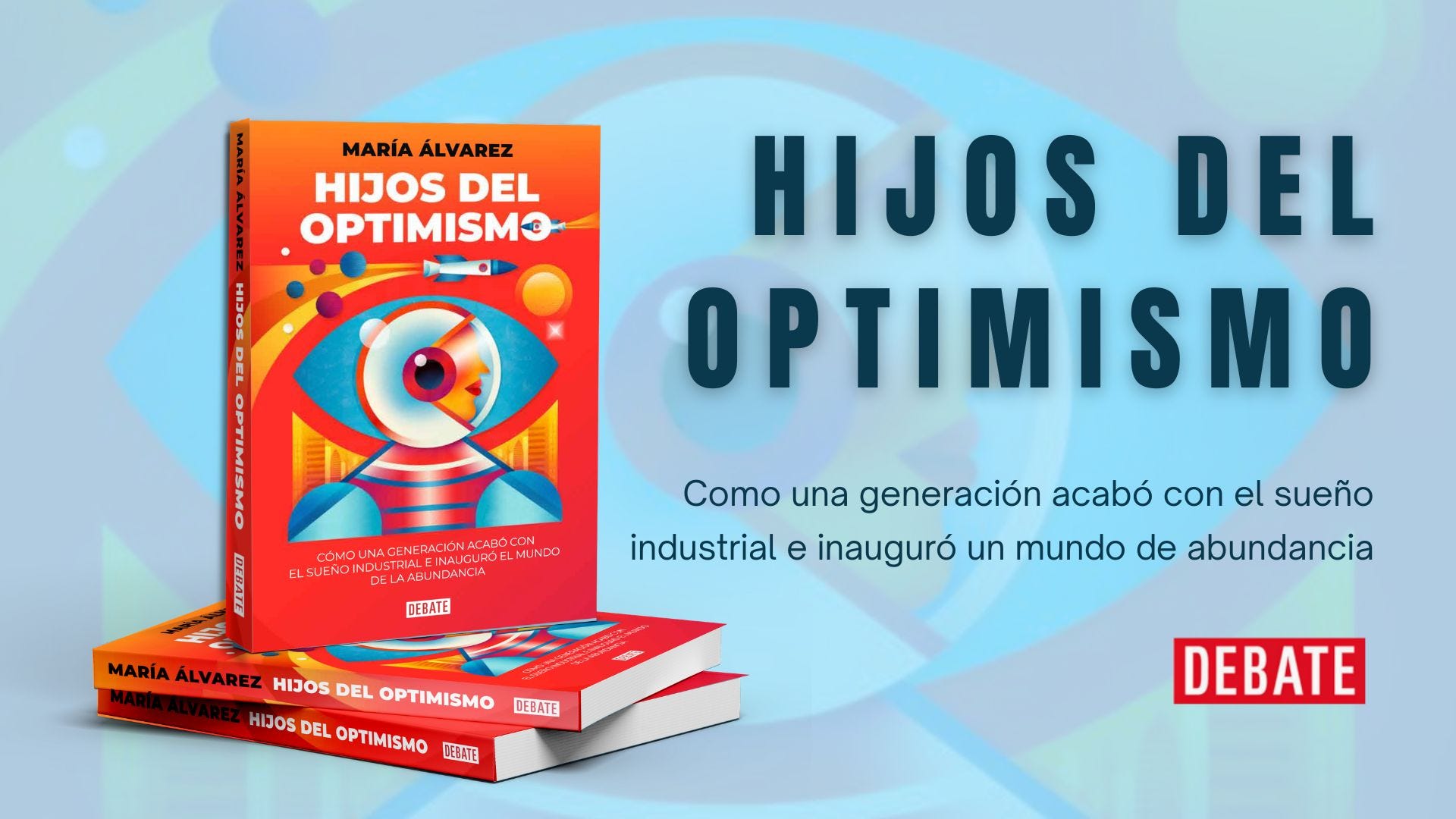
If you want to stop pointing out the broken windows in the world, you’ll like Hijos del optimismo (Children of Optimism). It’s my first book, the older sibling of this newsletter, and a project I’ve been working on for many years.
You can already order Hijos del Optimismo on Amazon, La Casa del Libro, El Corte Inglés and the publisher’s website, Debate.
You can also read more about me and the story that inspired me to write it
https://en.wikipedia.org/wiki/Broken_windows_theory
Photos: Photo by Vitaly Gariev on Unsplash y nytimes