


The original (Spanish) version of this article can be found here.
‘The only thing more powerful than hate is love’
— Bad Bunny.
Robert Kennedy said that GDP ‘measures everything except what makes life worthwhile.’ It’s obvious: money or possessions, hours worked or the title that appears in your email signature are not what really define our experience. If anything, they are parts of an exoskeleton that holds within it a life made up of emotions, passions and fears.
Even so, every time a question arises — ‘Why is the far right growing?’, ‘Why are we losing confidence in democracy?’, ‘Why do we feel that society is in crisis?’ — instead of looking at what really matters, we return to GDP, to the hard, easy-to-find data of the economy. It is not surprising, then, that much of our understanding of the world falls painfully short.
I cannot help thinking that there is something prophylactic about all this. The economy is such a sterile field that no one has to reveal anything about themselves to talk about it. Over GDP, one can fight tooth and nail without revealing oneself. But if, instead of statistics, we look at art, television, cinema or literature, and ask ourselves where we really feel life in crisis, we will see that it is not our bank account that hurts us most, but love. Paradoxically, the more connected we seem to be, the lonelier we feel. Love has become a scarce commodity that many people lack and many others fear losing.
How silly, isn’t it? If anything is truly abundant, it is
So, for this Valentine’s Day weekend, a few weeks ago I decided to write a little theory about my particular —and somewhat unusual— way of understanding love from the perspective of abundance.
To my surprise, this post, which was intended to be a lightweight note among the rest of the economic and technological content, has ended up saying some very important things about a nascent theory of abundantism that I hope you will like.
What is love?
Love is, in essence, curiosity. We say we love someone when we are interested in and involved in their existence. Love is ‘active concern for the life and growth of those we love’1 or ‘the condition in which another’s happiness is essential to your own happiness’2.
In English, there is a phrase that explains it particularly well: to be invested in someone (or something) is something like being interested, but not just superficially, but having something at stake; to be invested in someone is to have placed part of one’s own time, energy, even identity in the future of another. So to love is to stop being a spectator and become an interested party in another story.
Notice how, from this definition, it is not necessary for that emotion to be reciprocated; one can perfectly love someone who does not return that love. This is why teenagers can become infatuated with a K-pop star living thousands of kilometers away, just as mothers can fall in love with each of their children long before those babies are old enough to reciprocate. For this reason, someone may continue to love their father even after his death, while another person might be enamored with an idealized version of a first love from their youth, which, most likely, was not even exactly as they had imagined.
Love is as abundant as our capacity to pay attention: we could be in love with half of humanity or, at least, with as many people as we can evoke simultaneously without neglecting others. We could fall in love with many men and many women—some known, others less so. We could live in that experience all the time, every minute, until it overflowed our entire existence. Just as it seems we live immersed in hatred, we could live in love.
If we do not, it is because today this abundant form of love is proscribed. It was canceled the day love became synonymous with commitment.
Love as Commitment
For millennia, love and commitment were two very distinct things. Demosthenes claimed that good Greek citizens had “lovers for pleasure, concubines for daily care, but wives to bear legitimate children and be faithful guardians of their homes.”3
Until the Modern Age, aristocrats married whoever suited the family to produce legitimate heirs to manage the heritage; marriages were arranged and materialized long before the brides and grooms were old enough to understand what was happening. Common people, although lacking lineage, also married for convenience; they brought strength for labor, the possibility of a dowry, land, or simply the ability to share tasks necessary for survival.
In the Middle Ages, early romantic tales of love had no relation to commitment. Instead, they represented a rebellion against that mandate: the possibility of a life beyond duty. Romeo and Juliet, Tristan and Isolde, or Lancelot and Guinevere challenged the established order by falling in love outside of marriage.
However, in the early 19th century, with the rise of the first major cities and urban development, the game of social status began to transform rapidly. The worth of an individual ceased to be defined by the land they owned, and personal attributes—reputation, titles, skills, social networks—began to carry equal or greater weight than agrarian property. Marriage became a strategic investment in human relationships, and that romantic love which had emerged as protest gradually transformed into the cultural justification for marital commitment.
Over time, the bond between love and commitment solidified until, after World War II, it had established itself as the only legitimate glue not only for marriage, but for family and each person’s life project.
Commitment, unlike love, is scarce. We cannot live simultaneously with half of humanity, nor can we impose upon ourselves the burden of paying half their rent and birthing their children. When love became tied to commitment, the possibility of loving freely and abundantly became dangerous. Because if the justification for commitment, upon which domestic economies and social stability rested, was an emotion, it could not be volatile, immeasurable, and difficult to govern: its abundance became a formidable threat.
If not regulated or tied to a social contract, love endangered societal stability: thus, it had to be scarce and stable. Permanent. As predictable as the other parts of the industrial machinery. It had to be linked to commitment and limited to reciprocal affections, those that operated almost like an exchange of value.
Thus, transactional love, the one associated with commitment, solidified as the only “true love.” Only those forms of love that served to facilitate the devotion of another human being survived as valid expressions of this type of curiosity. Marriage, the highest form of commitment, emerged as the supreme bond, while children and family—who are expected to commit to us—occupied a discreet second place.
All other forms of love, which had always existed and would continue to do so, were proscribed, often through shame. Some, through direct social sanctions, such as extramarital relationships. Others, by making them seem ridiculous. Since then, in teenage romantic comedies, love hurts when it is unreciprocated; characters are caricatured for being overly in love or for falling for someone “out of their league,” while overly affectionate friends are depicted as foolish. Meanwhile, the main characters are always those who are “hard to get,” those with scarce love, who never give themselves unconditionally—that is, without a transactional.
Thus, a singular type of love—the one directed toward a partner and expected to last a lifetime—solidified as true love. Love in all its other forms—the affection we have for K-pop stars, or friendships, or love for lovers and concubines—was relegated to the margins, as if it did not count, as if it did not deserve such a name.
That love, which was an abundant emotion, was reduced to a scarce thing.
The Most Painful Scarcity
Without any theoretical framework to support me, I assert that this scarcity of love we have imposed is the cause of today’s most acute pain in society. It is this precariousness that lies behind the statistics showing that everyone is angry and furious and that “society is broken.” The lack of love is that thing worth pursuing that cannot be explained by all the GDP numbers.
Because love, in this definition we are exploring, is the precondition for what is essential to our existence: connecting with other humans. If we strip it of the cultural baggage it carries today, it becomes evident that this genuine curiosity about another person’s story— or even about another animal—is the substrate from which those sparks can emerge, in which we experience a profound connection with others; those moments that leave us with an overwhelming sense of being whole, of lacking nothing. Those explosions that occur in (good) sex, or in nights of laughter that leave us sore, or when we half-discover an idea with another person that no one had understood before, or when we celebrate a goal with our best friend. That experience where it seems the universe aligns with you, like when you hug a child.
That we have to describe these experiences as “flashes” or “moments,” rather than as a daily habit, gives us an idea of the lacerating scarcity in which we live.
“What makes love a form of madness,” says Eva Illouz, “is that it has no connection to reality.” And for that reason, because it only lives within us and is not tied to the limits of the physical world, love is not scarce; it is abundant and holds the promise of returning to that intense experience of being a complete human, connected to others.
I want to imagine that those men and women from Classical and Medieval times, who did not bear the moral weight of scarce love, although they married for lineage, still sought love everywhere. But we cannot even allow ourselves that. In our lives, love has been restricted to the capacity for commitment we can offer and that can be offered to us. When someone put love in the closed box of marriage, they robbed us of the possibility of connecting with others.
As a result, people see how that possibility of truly connecting with other human beings is becoming increasingly limited. We find ourselves surrounded by cardboard relationships, sustained by clichés and elevator conversations that hardly produce the deep intimacy that makes us fully human. I have no doubt that it is the desperate search for more opportunities to feel that connection that drives the consumption of alcohol and drugs.
Fifty years ago, capitalism promised to end that scarcity. The “knowledge society” was supposed to bring a world of connected intellectuals living a life of sparkling experiences like those in Woody Allen’s films. Pure connection.
It did not happen. And today we drown in the life we have, in scarce love, rummaging through the internet in hopes of finding— not just on Tinder, by any means— other human beings with whom to share that bond.
And this, in my opinion, is why hatred prevails today. Because while love became scarce, hatred remained abundant. So it is no surprise that you might detest the president or even generic groups of people, but you would be locked away in a very dark place if you claimed, with the same fervor, that you were in love with him.
A Small Theory of (Free) Love
A few years ago, I found myself tangled in one of those relationships where love and commitment cease to align. Over time—and with a great deal of therapy—I discovered one thing. What was truly painful for me was not that this person had stopped loving me (in reality, that hadn’t happened), but that once our commitment was broken, for some reason, I felt obliged to stop loving him, to stop being invested in him. To lose the connection we had.
I have the feeling that this is quite universal. What hurts us when commitment ends, or when we are not “reciprocated,” is that we feel compelled to give up the love we had. But it is an optical illusion: we are convinced that we desire to be loved solely because we have forbidden ourselves to love without being reciprocated.
Thus, the love we had is proscribed, just like a teenager’s love for their idols or a woman’s love for the child who died before birth. We have convinced ourselves that love must be measured in the same way it is tied to commitment, so one cannot be madly, intensely in love with all their friends. Nor can one continue to love an ex-partner, much less acknowledge loving someone who doesn’t even notice them.
But what if we allowed ourselves to love wildly, expecting nothing in return? What if we were capable of loving with the same freedom with which we hate today?
If we let go of that mantle of scarcity in love, what emerges is the opposite: we must love to the limits of our own capacity. To bathe in that emotion. To wake up every morning in love with a K-pop star, with your friends, with that guy you occasionally share a bed with, with your children, of course, but also with the children of all your friends, and even with your partner’s children, even if you didn’t give birth to them. Loving while relinquishing any expectation of reciprocity returns to us the possibility of abundance because when your love is infinite, you do not need it to be paid back.
It is here that it becomes clearer that abundance is synonymous with freedom. It has nothing to do with having more scarce goods (that is, more commitments) but rather with allowing ourselves to live in a world of limitless things. And in beginning to recognize a higher status not to those who possess more limited goods, but to those who know how to live a good life (extraordinarily good, even!) in an abundant place.
So I have stopped tying my hands behind my back in love. And since then, I move forward without brakes. I live in love with many people. My curiosity and desire to connect with others are no longer limited by the commitment we may have, nor even by the time we spend together, but in every moment we share, and in all the time I dedicate to thinking about those other people, I allow myself to feel the same ecstasy that most people reserve for the “love of their life.”
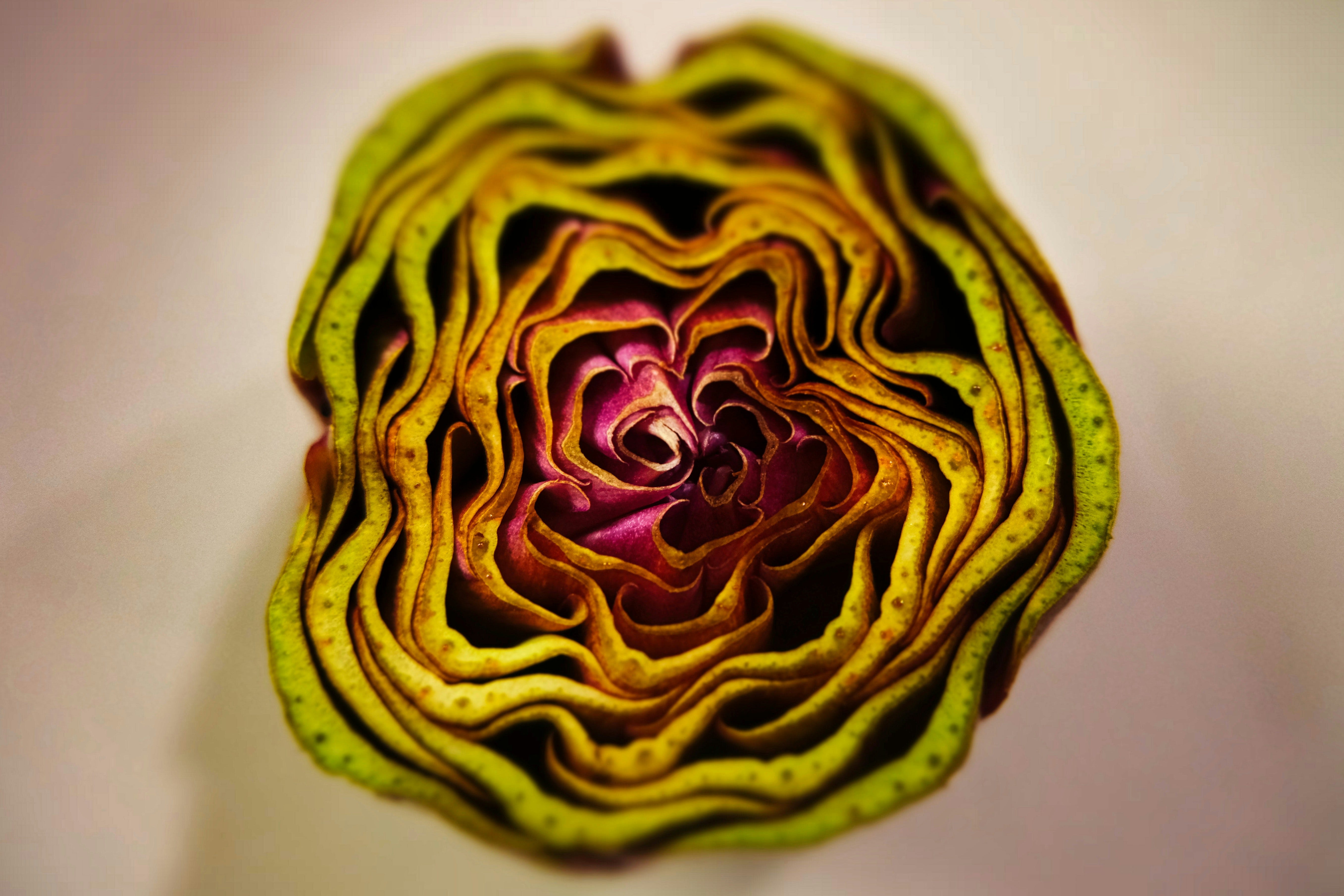
In French, they say that people who are very romantic have “a heart of artichoke,” “un cœur d’artichaut,” because they go through life giving a petal to each person. I reclaim that spirit, and I give pieces of myself until I exhaust myself.
And I seem like a weirdo, I confess. There are likely people who think I am too naïve, or too intense, or too goody-goody. But you know what? I don’t care. Because the consequence is that my inner life resembles that of adolescents living on a cloud thinking about their K-pop star, except my stars are flesh and blood, and I see them often: they are my friends, my lovers, my family, and the people I encounter who dazzle me, even if I never see them again.
And I am very happy. There is not a sliver of space left in me for hate.
Commensalism
While writing this article, I realized that this small theory of love has everything to do with a larger one that is at the center of all the things I think and write about.
Long ago, Adam Smith proposed that people act out of selfishness, and that this pursuit of individual interest magically produces a collective good. Other authors later tried to correct Smith and prove that humans are not selfish but altruistic: they do the right thing for everyone in the expectation that others will do the same. They care, hoping to be cared for; they drive on the right side of the road, trusting that others will do the same.
There is certainly some truth in all of this, but I would argue that the highest expression of humanity lies in the idea of being “commensalist.”
Commensalism is a form of biological interaction in which one individual benefits while the other is neither harmed nor benefited. The term comes from the Latin cum mensa, meaning “sharing the table,” and was created to describe the relationship in which one species takes advantage of the waste of another without harming it, like the dogs and cats that followed the early communities of hunter-gatherers.
But something extraordinary happens with humans: we have almost everything we need. We are capable of producing much more than we require. That’s why we can exist in a world of abundance: we are the only species capable of systematically creating more than we consume.
An innumerable amount of human behaviors—I would say almost all that go beyond mere survival—are commensalist: writing a book (or a newsletter like this), composing music, or software, doing science, caring, teaching, painting, dancing, producing art, or inventing tools. Our essence is to give, to create things that benefit others without expecting anything in return, simply because it makes us happy. In love, as in knowledge and art, our life experiences generate more than what is needed to create.
In fact, we could say, without fear of being wrong, that human progress is a consequence of this commensalism. From Socrates to Aristotle, Gutenberg, Newton, Curie, Kant, Lincoln, Martin Luther King Jr., Tim Berners-Lee, and even Smith himself, the great figures who have pushed the world forward did not do so out of a desire for profit; on the contrary, they dedicated themselves to creating ideas that could be used by all without being depleted. The same is true in literature and art. Does anyone really believe that Camus, or Shakespeare, or Beethoven wrote expecting the world to give them something in return?
We could even say that something went awry the day we began to look at that generosity with suspicion and made that selfless giving seem naïve or ridiculous.
There are many species of selfish animals and many altruistic ones, but that ability to give without harming and without expecting reciprocity is, for me, the purest form of our existence, what makes us genuinely human.
So if I had to start liberating abundance somewhere, I would begin here, with love. I would start by allowing ourselves to love without measure, without filters, without any accounting. By unleashing that curiosity for others until we are filled to the brim and leave no space for hatred. And by silencing those who seek to shame us.
We need to make having a heart of artichoke a trend. ;-)
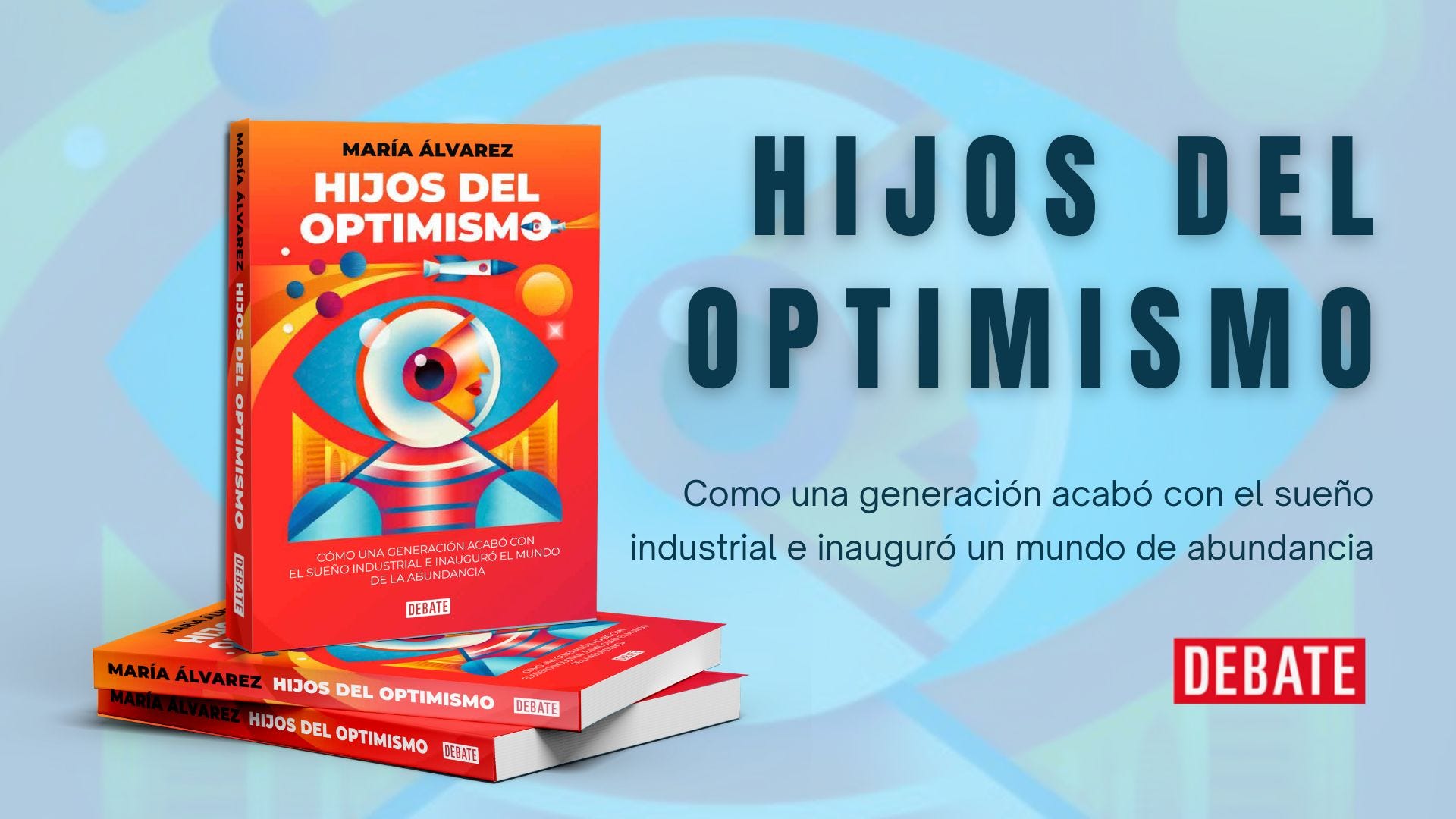
If you are also an abundance thinker, you will like Hijos del optimismo (Children of Optimism). It is my first book, the older sibling of this newsletter, and a project I have been working on for many years.
You can already order Hijos del Optimismo on Amazon, La Casa del Libro, El Corte Inglés and the publisher’s website, Debate.
You can also read more about me and the story that inspired me to write it
https://en.wikipedia.org/wiki/The_Art_of_Loving
https://www.goodreads.com/quotes/4964-love-is-that-condition-in-which-the-happiness-of-another
https://www.worldhistory.org/article/1713/love-sex--marriage-in-ancient-greece/
Photo by Thomas Gabernig on Unsplash